Showing posts with label BA Leeds Met - Sound. Show all posts
Showing posts with label BA Leeds Met - Sound. Show all posts
Saturday, 16 March 2013
Sync Sound
When recording someone speak, say in a restaurant and you wish to use a substantial amount of cutaways or GV shots in the final edit make sure you establish the context in where the person is speaking because to hear a voice with lots of back ground noise going on without visuals to match can be jarring for a viewer. You need to establish the fact the person is speaking in a restaurant, if you don't do this then you must record clean sound, the voice only, without any distracting back ground noise.

Friday, 16 November 2012
Radio Mics
Radio mics are battery operated and come in two forms.
- Handheld (interview mic, bands ect...)
- Body warn (little neck mics)
They have two different frequencies
- VHF & UHF. Both operate in the same way. But the UHF is a newer system.
They come with a transmitter (Tx) and a receiver (Rx). The receiver comes in two forms, standard and diversity. Diversity increases the range and prevents drop out.
Saturday, 10 November 2012
More Sound Notes
Analogue recorders like the Nagra used 1/4" tape and the mini Nagra (cassette recorders) used 1/8" tape.
At the school big productions use Fastex Recorders and smaller productions tend to use Zoom.
Audio used to be measured in CPS but its now measured in Hz.
Audio, like film, in digital format can be copied multiple times without a degrading effect appearing in the material. Analogue tape re used caused a large amount of hiss. Dolby along and did their best to erase the hiss from tape.
Digital sampling frequency -
44.1 khz is CD quality
48. khz is a higher quality used for film.
The mp3 is the most common audio compression but there are others like wma. and AAC.
Saturday, 13 October 2012
Audio Polar Patterns
We've taken a look at various mics in class and where they pick up the sound best.

The circular diagrams at the top of the list suggest the directions in which these mics pick up sound.
The circular diagrams at the top of the list suggest the directions in which these mics pick up sound.
Friday, 5 October 2012
Sound Equipment Notes
Microphones use an XLR cable to connect themselves to the cameras/mixers ect... And can also be used to create longer cables.

You can usually tell if a piece of equipment is designed for professional use because it will have an XLR plug socket.
A lot of the early sound equipment descended from telephone technology because they were the first pieces of equipment to manipulate sound.
The shotgun mics have two models, a longer microphone and a shorter microphone. The shorter version picks up a much more wider pattern of audio than the longer mic. The longer captures a more channeled audio.
 Shorter Model.
 Longer Model.
You can usually tell if a piece of equipment is designed for professional use because it will have an XLR plug socket.
A lot of the early sound equipment descended from telephone technology because they were the first pieces of equipment to manipulate sound.
The shotgun mics have two models, a longer microphone and a shorter microphone. The shorter version picks up a much more wider pattern of audio than the longer mic. The longer captures a more channeled audio.
Shorter Model.Longer Model.
Thursday, 4 October 2012
History Of Sound
Before there was any sound recorded on film when the picture was screened in a cinema there would be huge organs placed on stage.

Once audio had started to appear in film the company 'Nagra' soon became a landmark in the TV and film industry. The audio recorders were durable and efficient, the brand went on to win many awards for it's inventions in the field of audio.
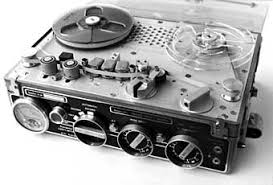
Unlike today the Nagras were designed to be repaired, opened up and modified. They used a reel of tape to record the audio, one reel of tape could record 25 mins of audio, compare that to a standard film camera's 10 mins of visual recordings its easy to understand how impressive this piece of kit was.
As time went on the Nagra was bettered by digital technology. It was replaced by the digital stereo recorder 'DAT' it was like a Walkman and cost around 600 pound. This used large DV tapes to record on.
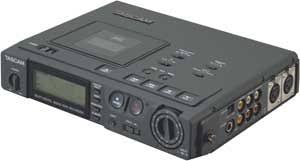
At this time audio tapes had issues with hiss on playback so when Dolby entered the scene and reduced the amount of interference it was a landmark achievement.
A mini disc recorder was going to replace the DAT but for one reason or another it never really took off. It was used primarily as a back up unit if all else failed.
Now everything is recorded onto a hard drive and has made playback, copying and editing audio much faster and easier but the technology is much more fragile, I doubt the tools we use today will last as long as the older audio recorders.
Analogue = DAT = HDD
Once audio had started to appear in film the company 'Nagra' soon became a landmark in the TV and film industry. The audio recorders were durable and efficient, the brand went on to win many awards for it's inventions in the field of audio.
Unlike today the Nagras were designed to be repaired, opened up and modified. They used a reel of tape to record the audio, one reel of tape could record 25 mins of audio, compare that to a standard film camera's 10 mins of visual recordings its easy to understand how impressive this piece of kit was.
As time went on the Nagra was bettered by digital technology. It was replaced by the digital stereo recorder 'DAT' it was like a Walkman and cost around 600 pound. This used large DV tapes to record on.
At this time audio tapes had issues with hiss on playback so when Dolby entered the scene and reduced the amount of interference it was a landmark achievement.
A mini disc recorder was going to replace the DAT but for one reason or another it never really took off. It was used primarily as a back up unit if all else failed.
Now everything is recorded onto a hard drive and has made playback, copying and editing audio much faster and easier but the technology is much more fragile, I doubt the tools we use today will last as long as the older audio recorders.
Analogue = DAT = HDD
Subscribe to:
Posts (Atom)